The weekly reporting grind, automated
Author
Demo Author
Date Published
Monday morning, someone opens last month’s spreadsheet. By Thursday, the headcount report is ready — and already four days stale. This ritual repeats in thousands of companies, and it is entirely automatable.
The manual ritual
Export from HRIS. Export from payroll. Export from the ATS. VLOOKUP on employee IDs, argue about whether contractors count, fix a date format, rebuild the pivot, paste the chart into the deck. Repeat monthly, per region, per audience — and start over when a system changes its schema.
What gets automated instead
- Scheduled ingestion — sources sync incrementally; nobody touches an export again
- Identity resolution — the same person maps to one entity across every system, once
- Validation — schema drift, duplicate keys and broken referentials are flagged at ingest
- Metric computation — governed definitions produce the same figure for every consumer
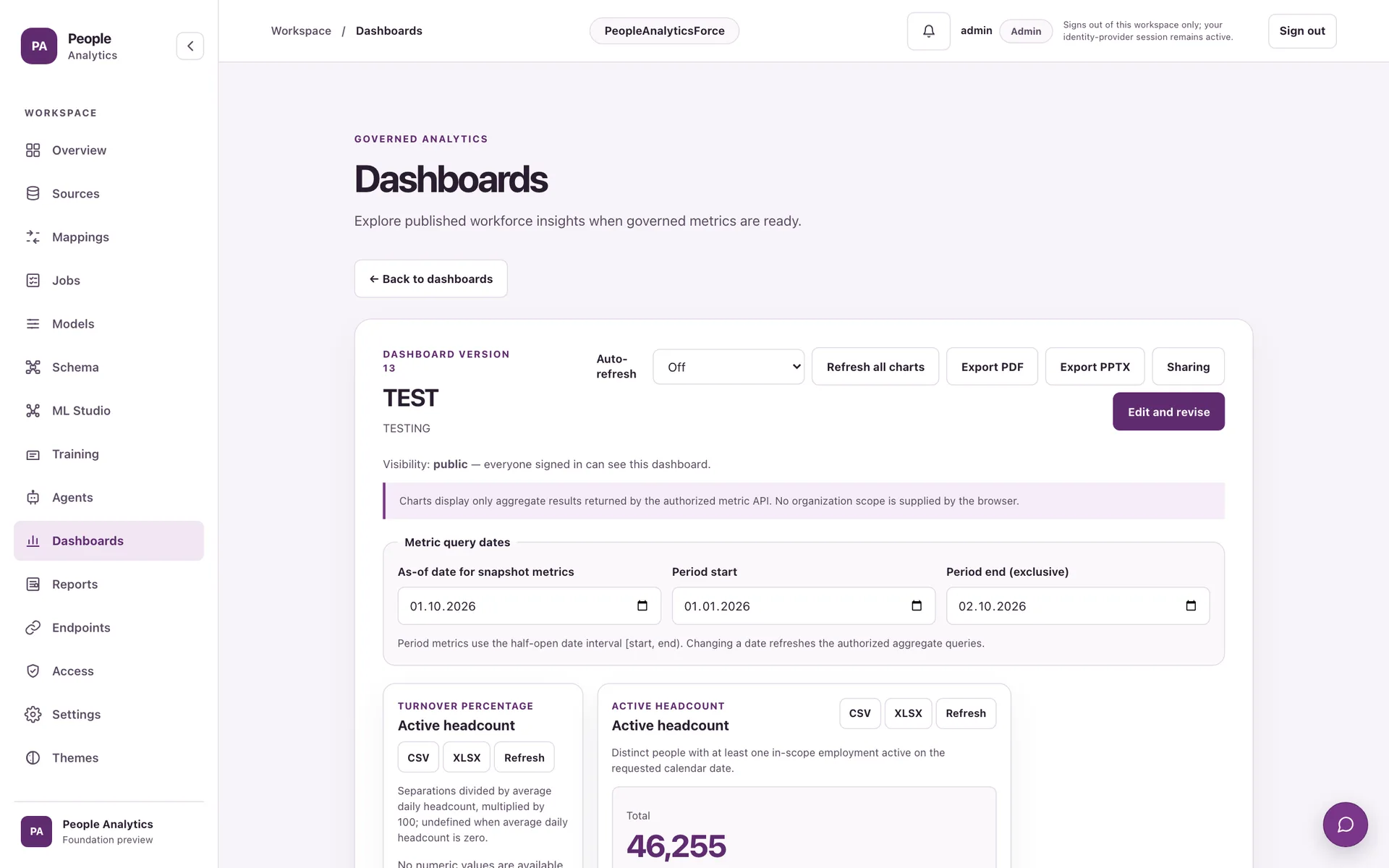
- Publication — dashboards refresh on schedule; PDF and PPTX reports export without a copy-paste step
- Alerting — when a metric moves outside its expected range, the right people hear about it first
Underneath: a governed pipeline
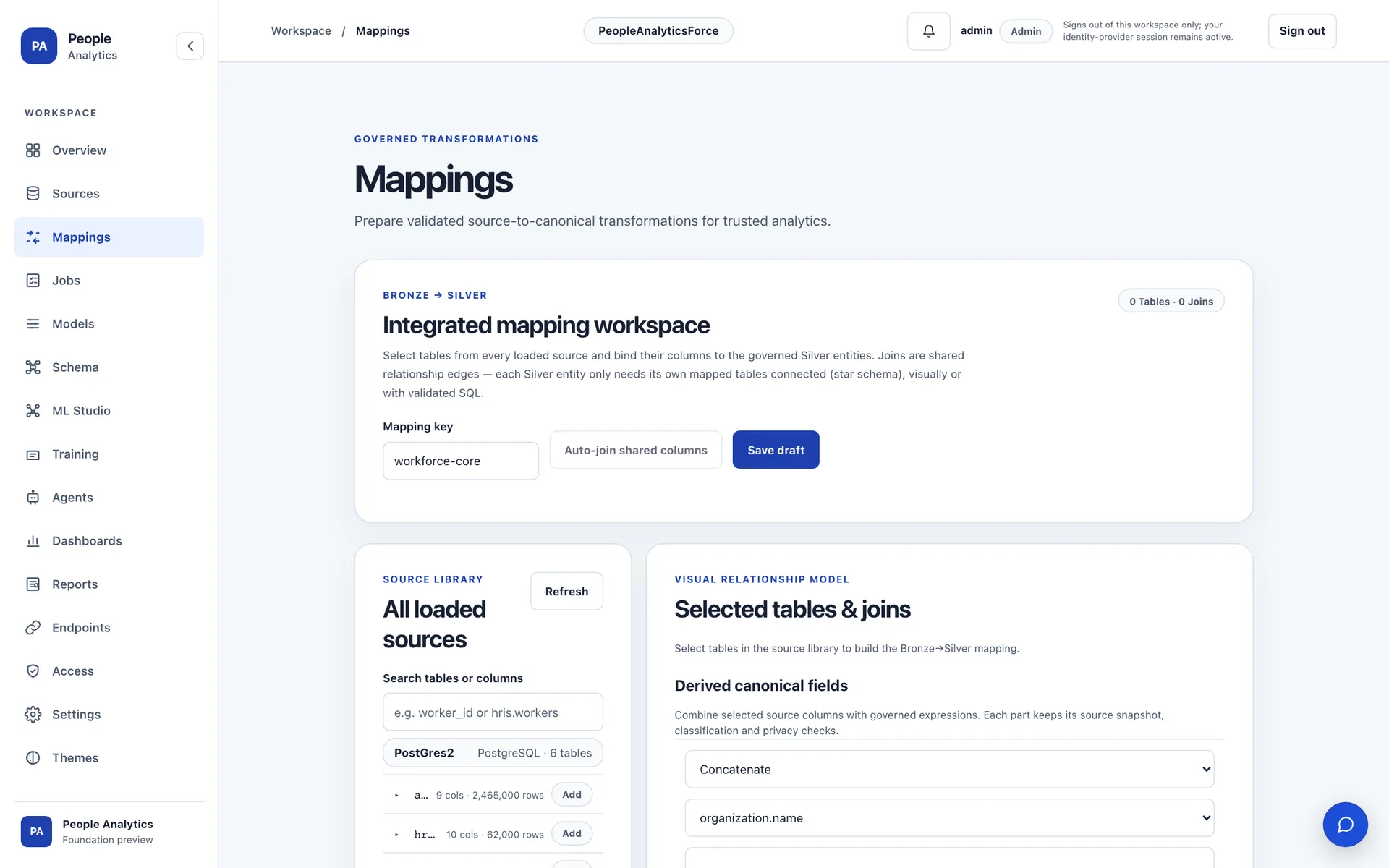
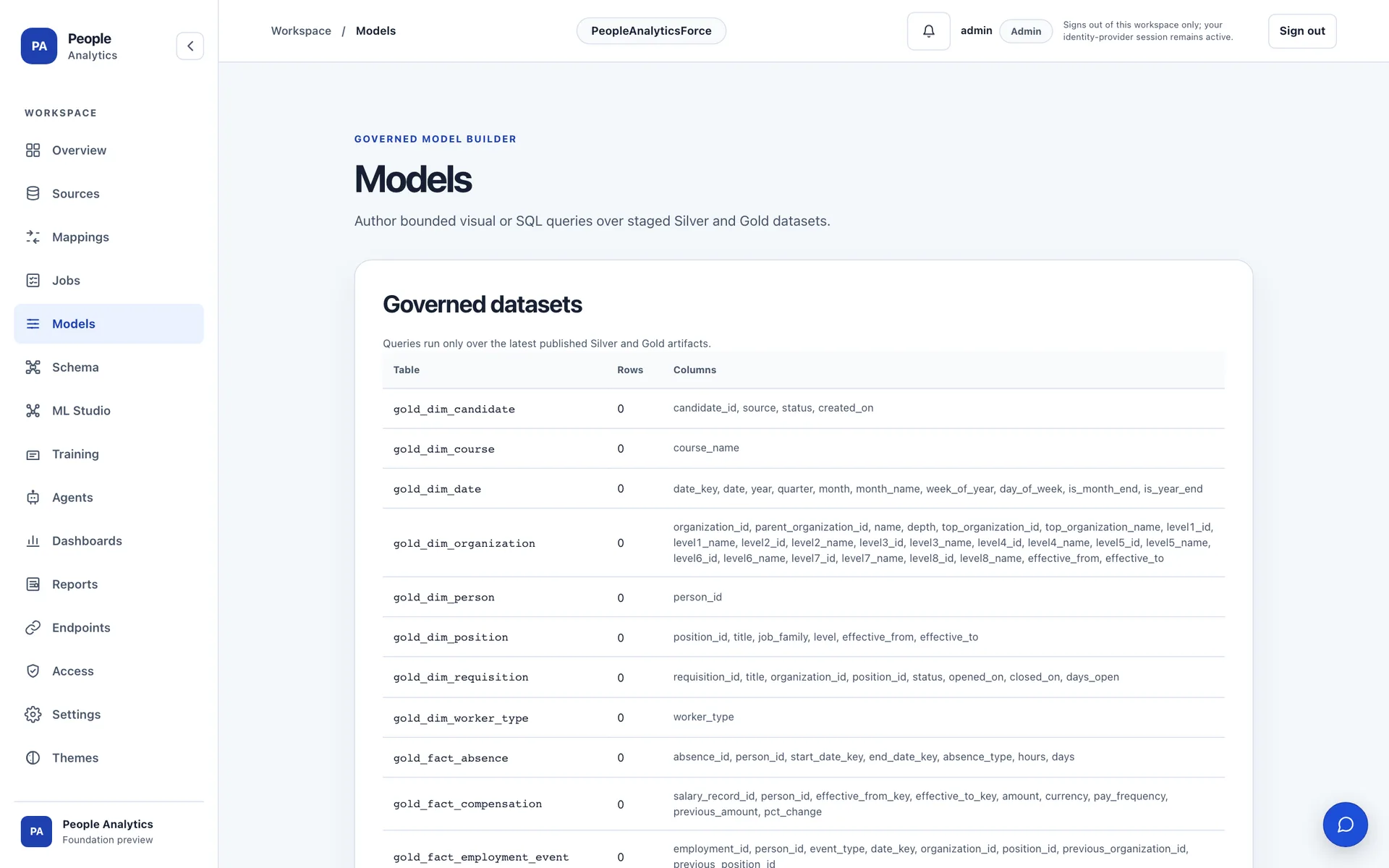
The mechanics matter. Automation you cannot audit is just a faster way to be wrong. Workforce Observatory routes every source through Bronze (raw), Silver (standardized entities) and Gold (analytics-ready facts) layers, with lineage on every number — so the automation is inspectable end to end.
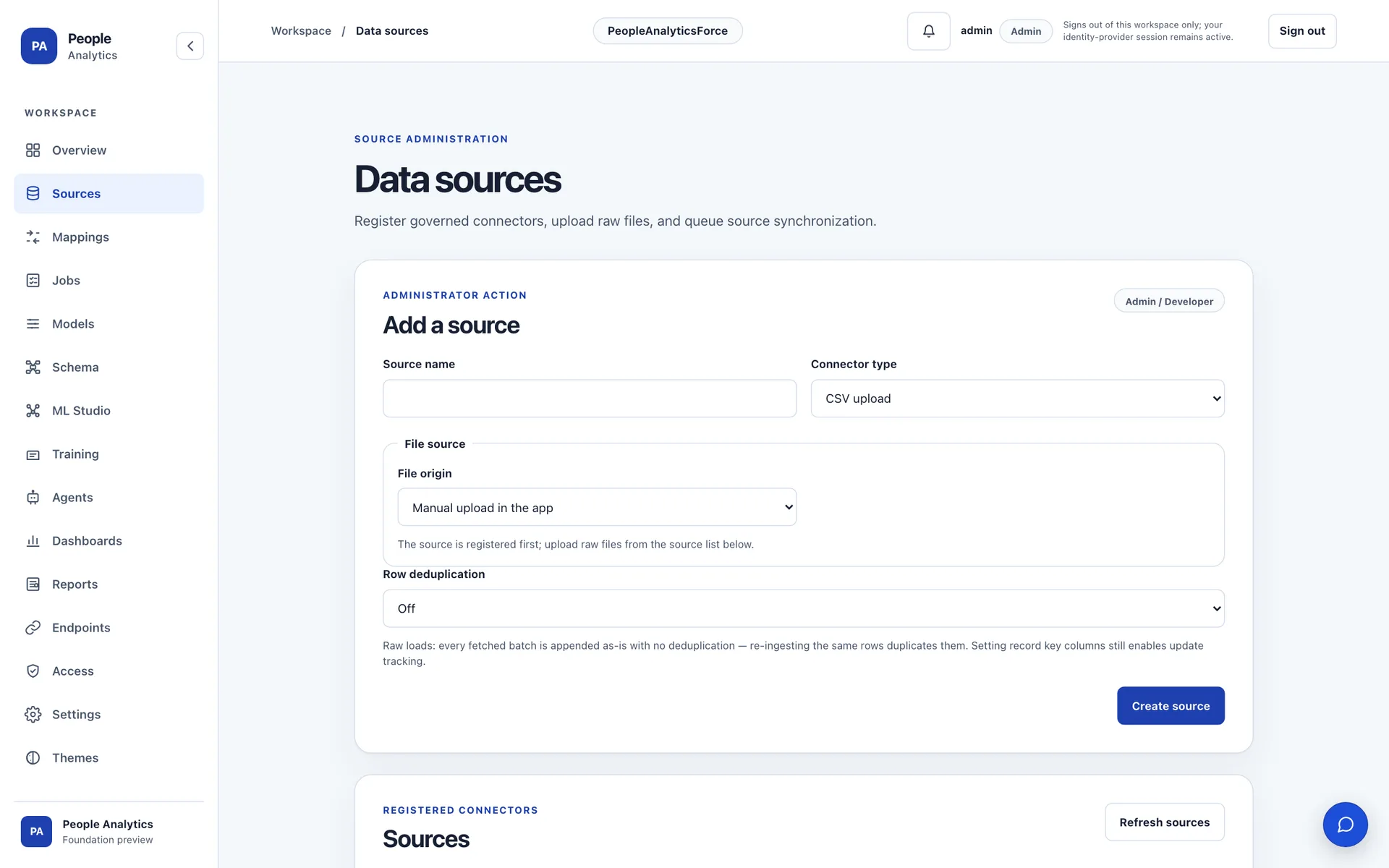
The result is a reporting cycle that runs itself: your HR team reviews and interprets — the platform does the plumbing.
The point
Analysts are expensive, scarce and better used on questions than on spreadsheets. Automating the mechanical layer is not about replacing judgment — it is about finally giving judgment fresh, trustworthy data to work with. See the pipeline running on your own sources: book a demo.
Most people analytics effort is data plumbing, not analysis. How automating ingestion, reconciliation and reporting turns HR data into decisions.
GDPR is not a ban on people analytics — it is a design requirement. How aggregation thresholds, role-based access and audit trails make workforce data safe to use.