GDPR-first people analytics
Author
Demo Author
Date Published
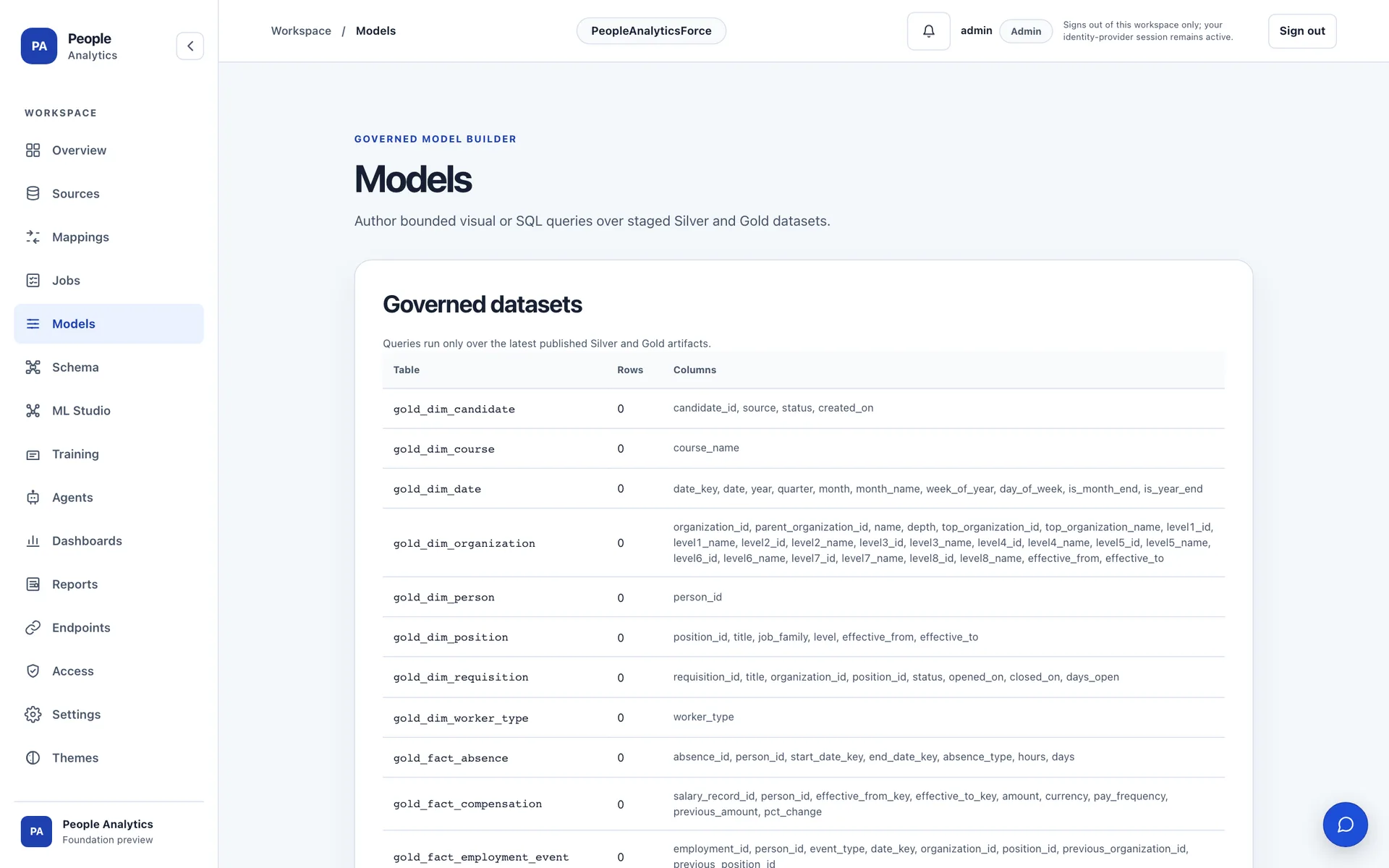
People analytics runs on the most sensitive data a company holds. Get privacy wrong and you do not just risk fines — you lose the employee trust the entire practice depends on.
What GDPR actually requires
The regulation is not a ban on workforce analytics — it is a demand for discipline. Lawful basis, purpose limitation, data minimization, transparency and the right to be informed are all achievable inside an analytics stack. What breaks them is usually not malice but architecture: data copied into spreadsheets, extracts without retention, dashboards that show individual data to anyone who asks.
The privacy-by-design checklist
- Aggregate by default — minimum group sizes (typically n≥5) before any breakdown is shown
- Role-based access — analysts see what they need, managers see their org, nothing more
- Lineage and audit — every figure can be traced to its source and every access is logged
- Retention rules — raw extracts expire, anonymized aggregates persist
- Data residency — the platform deploys inside your perimeter, your data never leaves
Trust as a product feature
The deepest reason to build privacy in is not compliance — it is adoption. Employees who understand what is measured and why engage honestly with surveys and stay candid in feedback. Works councils that can inspect the governance model become allies instead of blockers.
That is why Workforce Observatory treats governance as a first-class module — aggregation thresholds, role-based access and audit trails are built into the pipeline, not bolted on after.
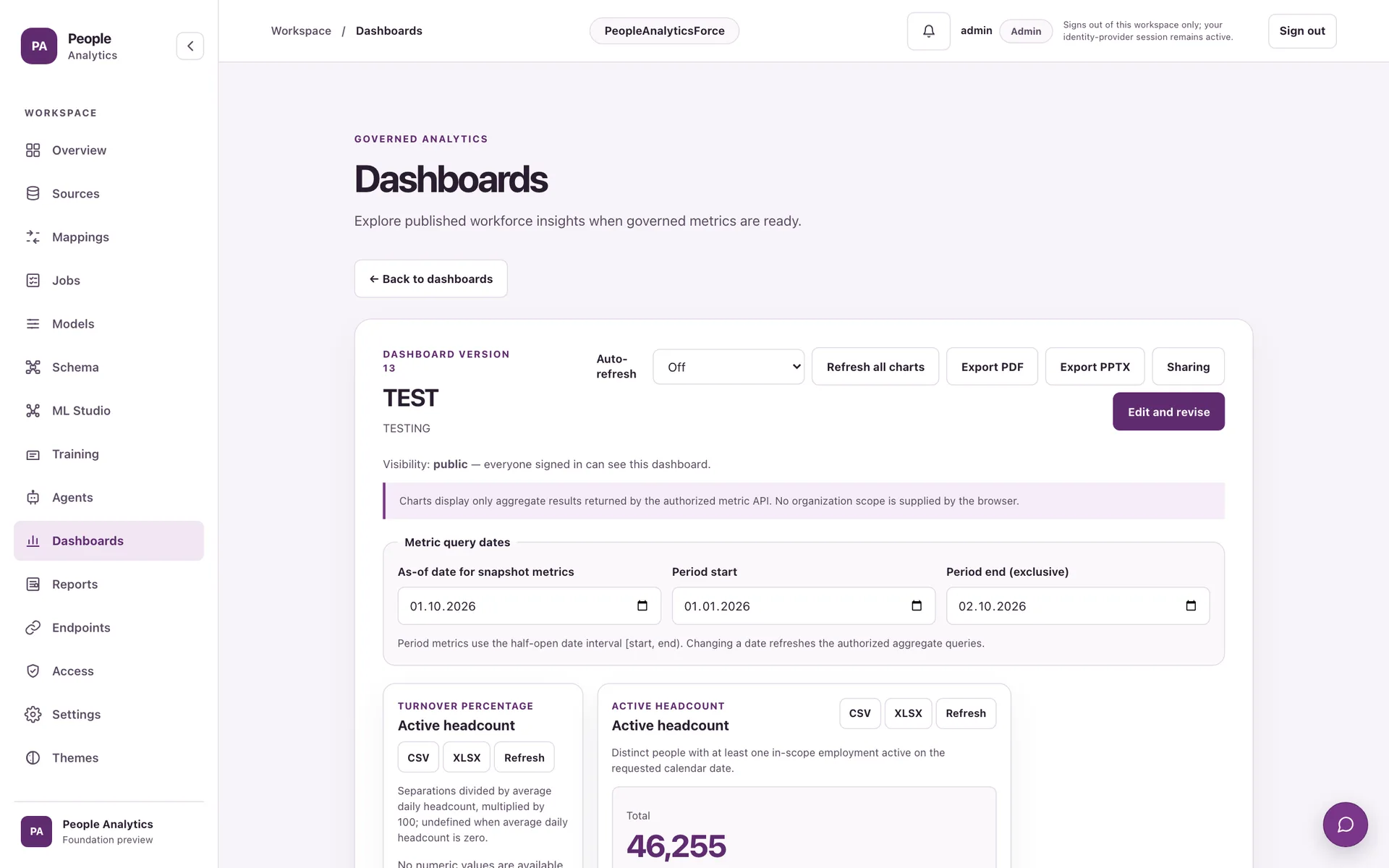
Most people analytics effort is data plumbing, not analysis. How automating ingestion, reconciliation and reporting turns HR data into decisions.
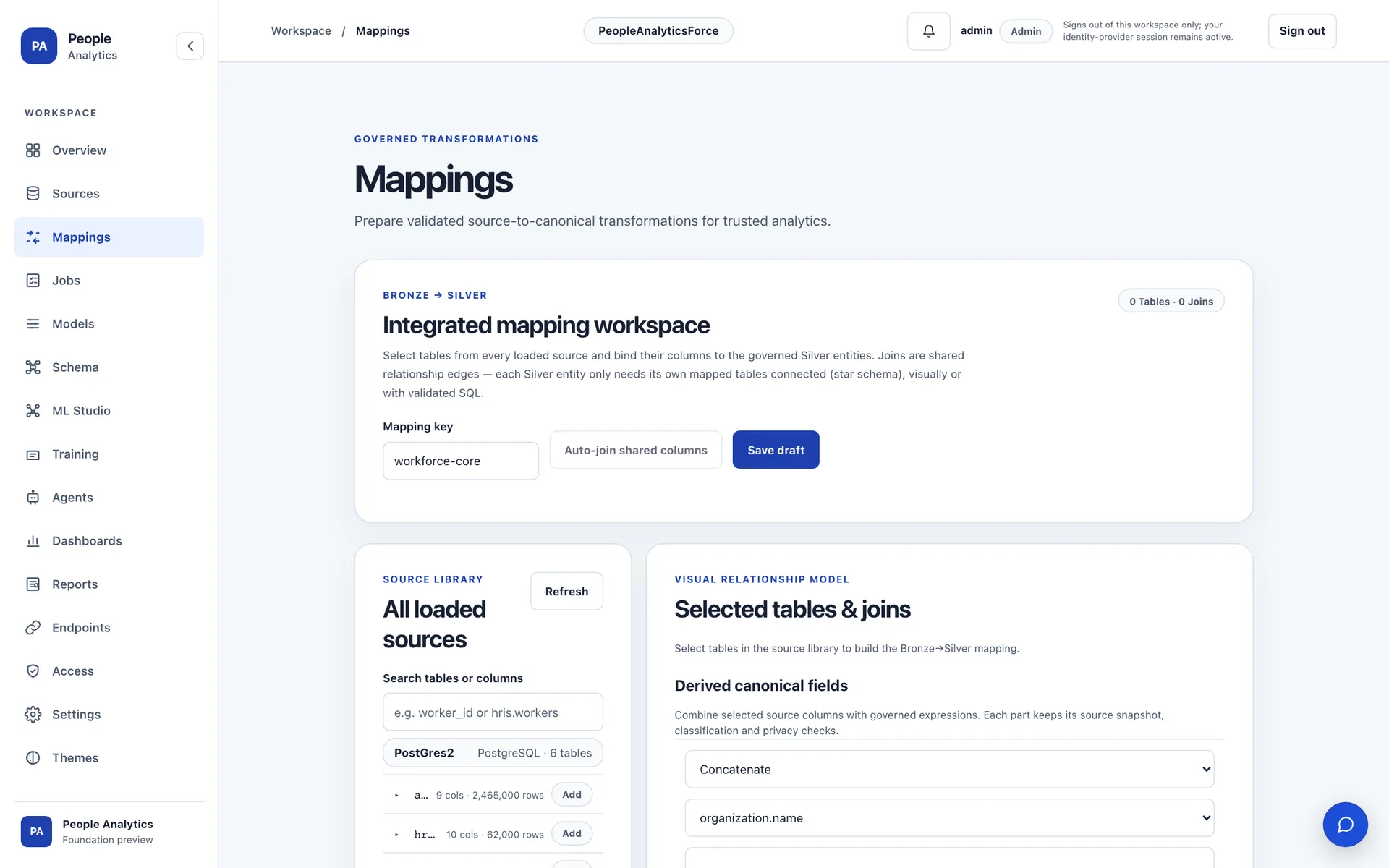
The monthly export-reconcile-rebuild ritual is automatable. How scheduled ingestion, governed metrics and published reports replace manual HR reporting.